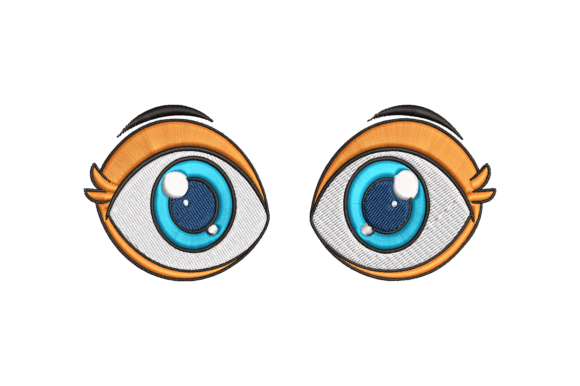
Cute Eyes: A Designer’s Review for Branded Merch
As an embroidery designer who has spent years digitizing files for boutique brands and local businesses, I approach every new machine embroidery design with a critical eye. It is not just about whether a motif looks good on a screen; it is about how it performs in the real world of commercial production. Today, I am reviewing Cute Eyes, a design categorized under Shapes within the broader Embroidery niche. This piece promises adorable charm and intricate details, but does it hold up when applied to small business merchandise, staff uniforms, or branded patches? Let us dive into a professional assessment of its viability for your next project.
First Impressions and Visual Personality
The immediate appeal of Cute Eyes lies in its ability to humanize a brand. In the current market, consumers are drawn to authenticity and warmth. A design that features expressive, stylized eyes can instantly make a logo feel more approachable and friendly. Unlike rigid geometric logos, this design leans into a playful yet polished aesthetic. It feels handmade rather than mass-produced, which is a significant advantage for Etsy sellers, crafters, and independent boutiques aiming to differentiate themselves from big-box retailers.
However, "intricate" is a word that requires caution in embroidery. While complexity adds visual interest, it can complicate stitching on certain fabrics. My first impression suggests that Cute Eyes works best when balanced with negative space. If the design is too dense, it risks losing its charm and becoming a stiff patch. For a design to succeed in the Shapes category, it must maintain clarity even when scaled down.
Real-World Applications for Small Business Merch
When considering where to place Cute Eyes, versatility is key. Here is how this design performs across various commercial applications:
- Embroidered Patches: This is perhaps the strongest use case. A well-digitized version of Cute Eyes can serve as a standalone iron-on or sew-on patch. It allows customers to customize their own jackets or bags, increasing engagement with your brand.
- Staff Uniforms and Aprons: For cafes, bakeries, or florists, adding this design to apron pockets or chest areas adds a touch of personality. It breaks the monotony of standard uniforms and reinforces a friendly service identity.
- Cap Embroidery: Placing the design on the front panel of a baseball cap requires precision. The curvature of the cap means the design must be simplified slightly to avoid distortion. If the eyes are too wide, they may wrap awkwardly around the curve.
- Tote Bag Design: Canvas tote bags are a staple for handmade brands. Cute Eyes can act as a central focal point or a subtle corner accent. Ensure the stitch density is appropriate for canvas, which is thicker than standard apparel fabric.
- Product Packaging Accents: Smaller versions of this design can be embroidered onto fabric tags attached to product packaging, elevating the unboxing experience for buyers.
Technical Considerations and Production Challenges
Before running a full production batch, there are several technical factors to evaluate. As a designer, I always recommend testing any new digital embroidery file thoroughly. Here are the critical checkpoints for Cute Eyes:
- Stitch Density and Fabric Texture: Intricate designs often require higher stitch counts. On delicate fabrics like silk or thin cotton, high density can cause puckering. Always use the correct stabilizer—cut-away for stretchy fabrics and tear-away for stable woven materials.
- Scale and Legibility: Test the design at its smallest intended size. If Cute Eyes is used as a sleeve detail or a small label, ensure the details do not merge into a blob. Simplify the design if necessary for sizes under two inches.
- Thread Color Contrast: The impact of this design relies heavily on contrast. Test it in black and white first to ensure the shape remains recognizable without color reliance. Then, experiment with brand-specific thread colors to maintain visual consistency.
- Hoop Size Constraints: Confirm the required hoop size before purchasing. Some intricate designs require larger hoops to accommodate stabilizer margins, which can limit placement options on smaller items like baby clothes or narrow straps.
It is crucial to note that specific technical details such as exact stitch count, file format compatibility, and recommended hoop dimensions are not provided in the general description. Therefore, you must verify these specifications with the vendor before committing to a large order. Never assume a file is optimized for your specific machine without a test run.
Enhancing Brand Identity and Customer Trust
Using a distinctive design like Cute Eyes contributes significantly to brand identity. Consistency in visual assets builds trust. When customers see the same charming motif on your website, your packaging, and your physical merchandise, it creates a cohesive brand experience. This professionalism signals that you care about quality, which justifies premium pricing for your handmade product lines.
Moreover, playful designs encourage social sharing. Customers are more likely to post photos of a cute, unique embroidered item on social media than a generic logo. This organic marketing boosts buyer engagement and expands your reach without additional ad spend. For creative studios and local businesses, this emotional connection is invaluable.
Practical Designer Notes for Implementation
To ensure the best results with Cute Eyes, follow these professional tips:
- Create a Printable Mockup: Before stitching, place the design digitally on photos of your actual products. This helps clients visualize the final look and approve the placement.
- Check Commercial Licensing: Always confirm that the embroidery file comes with a commercial use license. Using a personal-use file for selling merchandise can lead to legal issues.
- Compare With Other Design Assets: Ensure Cute Eyes complements your existing logo and typography. It should enhance, not clash with, your primary branding elements.
- Test on Real Fabric: Digital simulations are helpful, but nothing replaces a physical test stitch. Run the design on the exact fabric type you plan to use for production to check for thread breaks or tension issues.
In conclusion, Cute Eyes offers a delightful opportunity for small business owners to add personality to their custom apparel and accessories. Its potential shines in patches, aprons, and tote bags, provided that technical considerations like stitch density and scale are managed carefully. By treating this design as a strategic brand asset rather than just decoration, you can enhance customer loyalty and elevate the perceived value of your merchandise. Always prioritize quality control and proper licensing to ensure your commercial embroidery projects succeed.